
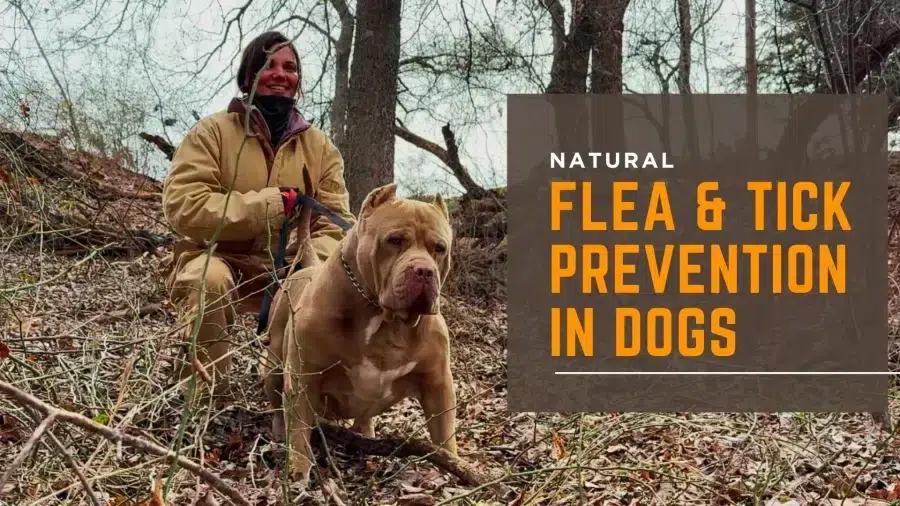
Every spring, my phone starts ringing. Families who picked up a puppy from us a few months back, or who are about to, want to know the same thing: what do you use for fleas and ticks? They're trying to avoid the harsh chemical stuff if they can. I get it. We feel the same way about our dogs.
So this is the long answer I usually give over the phone, written down so you can come back to it.
A few things up front. I'm not a veterinarian. What's below is what we've learned raising XL American Bullies for years, plus what I've picked up from holistic vets and from the studies I keep an eye on. If your dog has health issues, is pregnant, or is a young puppy, talk to your vet before trying any of this. And if you live somewhere with serious tick pressure (parts of the Northeast, the Upper Midwest, pockets of the South), natural prevention alone probably isn't enough. I'll get to why.
Conventional flea and tick products work. There's no question about that. The reason a lot of owners want to avoid them is that the active ingredients are pesticides, and some dogs react badly. We've seen it ourselves: lethargy, skin reactions, the occasional dog who just seems off for a few days after a topical treatment. Bullies in particular sometimes have skin sensitivities that make harsh chemicals a poor first choice.
The flip side is that natural methods are usually less potent and need more upkeep. You can't apply something once a month and forget it. If you go this route, you're signing up for weekly attention, daily tick checks in tick season, and a little bit of homework. That's the trade.

Start with the dog
This is the part most flea-and-tick articles skip, and it's actually the most important part. A healthy dog repels parasites better than a sick one. Fleas and ticks are opportunists. They go for hosts whose coats are oily and whose skin is inflamed.
So before you even think about cedar oil or bandanas, look at:
Diet. A high-quality protein-forward diet does more for parasite resistance than any spray. We feed our dogs accordingly and the difference over the years has been obvious. Dogs eating fillers and corn-heavy kibble seem to attract more bugs.
Coat condition. Regular brushing pulls out dead hair and dander that fleas hide in. For a short-coated bully, a rubber curry brush a few times a week is plenty. While you're brushing, you're also checking the skin.
Exercise and weight. Overweight dogs have skin folds that trap moisture and become flea hotspots. Keep your dog lean. This matters more for our breed than people realize because XL Bullies can carry weight in places you don't notice until you part the fur.
The yard. Fleas and ticks live in the environment. They jump or crawl onto your dog from there. Keep grass cut short. Clear leaf litter and brush piles, especially within 6 to 18 inches of the house. Cedar mulch around the perimeter acts as a natural barrier because fleas don't like it. If you have a wooded edge to your property, mow a buffer zone.
If you skip this part and go straight to a bandana with oils on it, you're treating the symptom and not the setup.
Natural Flea and Tick Prevention: How Garlic Works
We've recommended a treated bandana for years. It works as a daily, low-grade repellent for dogs spending time in the yard or on neighborhood walks. It's safer than topicals applied directly to skin because the dog isn't absorbing oils through the skin, just smelling them.
The original version of this post had readers mixing essential oils with water, which I've since learned doesn't actually work the way you'd want. Oil and water don't mix, so you end up with droplets of full-strength oil floating around. The fix is to use a carrier oil instead.
What you need:
- A cotton bandana that fits loosely around your dog's neck
- A small glass dropper bottle (1 oz works well)
- Fractionated coconut oil, almond oil, or grapeseed oil as a carrier
- Cedarwood essential oil (look for Cedrus atlantica or Cedrus deodara; avoid red cedar / Juniperus virginiana, which can be harsher on dogs)
Lavender essential oil (Lavandula angustifolia, true lavender)
The recipe:
-
Fill the dropper bottle with 1 oz of carrier oil. Add 3 drops of cedarwood oil and 3 drops of lavender oil. Cap it and shake gently. That's a roughly 1% dilution, which is what canine herbalists like Rita Hogan recommend for adult dogs.
Apply 5 to 6 drops of the mixture to the bandana, rub the fabric together so it spreads evenly, and let it sit for a couple of minutes before tying it loosely on your dog. Reapply every 4 to 7 days, or sooner if the bandana gets wet.
Cedarwood is the workhorse here. There's research showing it matches DEET's repellent effectiveness against tick nymphs for around 30 minutes after application. Lavender adds a second layer and tends to be calming for anxious dogs.
Who shouldn’t use this
This part matters. Some dogs and households shouldn't be using essential oils at all.
Cats in the house. Cats can't metabolize the compounds in many essential oils, including cedarwood and lavender. Even secondhand exposure from a treated dog sleeping near a cat can cause serious problems. If you have cats, skip this method entirely or keep the dog and cat in completely separate areas after application until the oils have fully dried and dissipated. Honestly, with cats around, I'd just go with a different approach.
Puppies under 12 weeks. Their systems aren't ready. Use mechanical methods instead: flea comb, frequent bathing with a gentle puppy shampoo, and environmental control.
Pregnant or nursing dogs. Skip the oils. Talk to your vet.
Dogs with seizure disorders, liver disease, or known sensitivities. Skip the oils. The compounds in lavender and cedarwood are processed by the liver, and dogs with compromised function can struggle.
Any dog showing a reaction. If you see excessive scratching, redness under the bandana, lethargy, drooling, or unsteadiness, take the bandana off and wash the area with mild soap. The reaction usually passes within a few hours, but call your vet if it doesn't.
Tick checks: the part most people skip
A repellent reduces the odds of a tick attaching. It doesn't eliminate them. If your dog has been outside in tick country, you check.
Ticks like warm, hidden spots. Run your hands slowly over your dog and pay extra attention to:
- Inside and behind the ears
- Under the collar
- Armpits and the chest between the front legs
- Belly and groin
- Around the tail and rear end
- Between the toes
For our short-coated bullies, this goes faster than for a long-haired breed, but the skin folds around the neck and shoulders deserve a careful pass. Run a flea comb through the coat too. It picks up flea dirt (looks like specks of pepper) and the occasional tick that hasn't latched on yet.
If you find an attached tick, don't yank it. Use fine-tipped tweezers, grip the tick as close to the skin as possible, and pull straight up with steady pressure. Don't twist, don't squeeze the body, don't burn it or smother it with petroleum jelly. Drop it in a small jar of rubbing alcohol or a sealed plastic bag once it's out. If your dog develops a fever, lethargy, or limping in the weeks after, take the tick (or the bag) to your vet so they can test it.
When natural isn’t enough
Beyond answering "what can I give my dog for fleas and ticks naturally," garlic offers impressive health benefits:
Immune System Support: Natural antibiotic, antiviral, and antifungal properties strengthen your dog's immune defenses.
Cardiovascular Health: Particularly beneficial for large breeds like XL PitBulls, garlic helps regulate blood pressure and improve circulation.
Digestive Health: Promotes beneficial gut bacteria while eliminating harmful pathogens.
Anti-Inflammatory Effects: May help with joint health in heavy, muscular breeds like XL American Bullies.
Liver Support: Aids natural detoxification processes.
A few common questions
How long does the bandana stay effective? About 4 to 7 days under normal conditions. Sooner if it gets wet from rain, swimming, or a bath. Reapply if you can smell the oils fading.
Can I use this and a prescription preventative together? Generally yes, but ask your vet first. Some prescription topicals shouldn't have anything else applied near the application site for a few days.
What about other essential oils I've seen recommended? Some are fine in proper dilution (rosemary, lemongrass, geranium). Some are dangerous: never use pennyroyal, wintergreen, tea tree, clove, or cinnamon oils on dogs. Peppermint and eucalyptus can be irritating; I'd skip them unless a holistic vet has walked you through it.
Does this work on mosquitoes too? Cedarwood and lavender both have some mosquito-repellent activity, though it's milder than against fleas and ticks. Treat it as a nice bonus. If you're in a heartworm region (most of the US now), you still need real heartworm prevention from your vet.
My puppy is six months old. Can I use this? Yes, at the dilution above. Watch closely the first time. If you see any reaction, take it off.
What we tell every family who picks up a puppy
Prevention works best as a system. Feed well, keep the yard managed, brush often, check after every outdoor session in tick season, use the bandana as one piece of the puzzle, and call your vet if anything seems off. Dogs that get all of this together rarely have parasite problems, and when they do, the problems get caught early.
If you've got a puppy from us and questions come up that aren't covered here, call. That's what we're here for.
You May Also Like






I am a highly skilled content writer and SEO expert with a passion for helping small businesses succeed in the digital world. With my extensive knowledge of the latest SEO techniques and strategies, I have successfully assisted numerous clients in improving their website rankings, generating more leads, and driving a significant increase in website traffic.
As a professional content writer and SEO expert, I am confident in my ability to contribute significantly to the success of small businesses. If you are seeking a results-driven, highly skilled digital marketer who can help you increase your ranking, convert new leads, and see a substantial improvement in website traffic, I would welcome the opportunity to collaborate with you.
Website: https://manmadewebsites.com/
Email: hello@digitalmarketingchap.com