
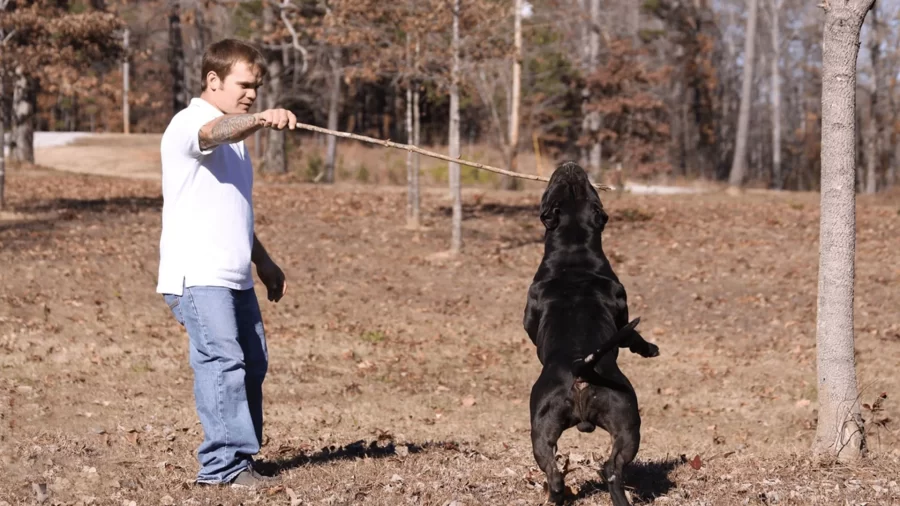
TL:DR: So what do pitbulls like to do for fun? Pitbulls need 60 to 90 minutes of exercise daily, split across two sessions. Their favorite activities are tug-of-war, fetch, flirt pole, running, and rough play. Mental stimulation matters just as much as physical exercise – puzzle toys, training sessions, and scent work keep them from getting destructive. Age matters too: no long runs before 18 months, and dial back intensity after age 7. A well-exercised, mentally engaged Pitbull is a calm, affectionate dog.
If you’ve ever owned a Pitbull, you already know these dogs don’t do anything halfway. They throw their whole weight into play, into affection, into sitting on your lap when they clearly don’t fit anymore. So what do they actually love doing, and how do you make sure they’re getting enough of it?
This guide covers every major activity by type, age, and what to watch out for.
How Much Exercise Does a Pitbull Actually Need?
Most adult Pitbulls need 60 to 90 minutes of physical activity per day, ideally split into two sessions. High-drive dogs, especially those under three years old, can handle more.
Puppies are different. Their growth plates don’t close until around 12 to 18 months, so high-impact exercise like long runs or jump-heavy agility work should be delayed. Keep sessions short (5 minutes per month of age, twice a day) and focused on low-impact play and socialization.
Senior Pitbulls (7 years and up) still need movement. Watch for stiffness after exercise, reluctance to get up, or limping. Any of those are signs to dial back intensity and check in with a vet.
1. Tug-of-War
Pitbulls were bred for strength and tenacity, which makes tug-of-war feel less like a game and more like a calling. A sturdy rope toy or rubber tug is all it takes.
Beyond the obvious fun, tug builds drive, gives you a natural opening to practice “drop it,” and burns real energy fast. A 10-minute session can take the edge off a dog that’s been inside all day.
Age note: Fine for puppies as long as you keep it gentle and avoid jerking the head around. Young dogs shouldn’t be pulling with full force until after 12 months.
What to look for: A good tug toy should have some give to it. Hard rubber or knotted rope both work. Avoid cheap squeaky toys; they won’t last five minutes.
Let them win sometimes. It builds confidence.
2. Running and Hiking
These dogs are athletic powerhouses with stamina to match. Many Pitbull owners discover their dog can comfortably keep pace on a 5-mile run without much trouble. Their muscular build and short coat make them well-suited for moderate temperatures, but they overheat faster than people expect.
Watch for overheating. Signs include excessive drooling, bright red gums, labored breathing, and stumbling. On hot days, run in the early morning or evening, bring water, and keep sessions shorter. Asphalt holds heat: if you can’t hold your hand on the pavement for 5 seconds, it’s too hot for their paws.
If you live near trails, make weekend hikes a regular thing. The combination of distance, uneven terrain, and new smells provides mental stimulation that a flat neighborhood walk simply can’t.
Age note: Wait until 18 months before running long distances. Before that, stick to casual leash walks and short play sessions.
3. Fetch and Flirt Pole
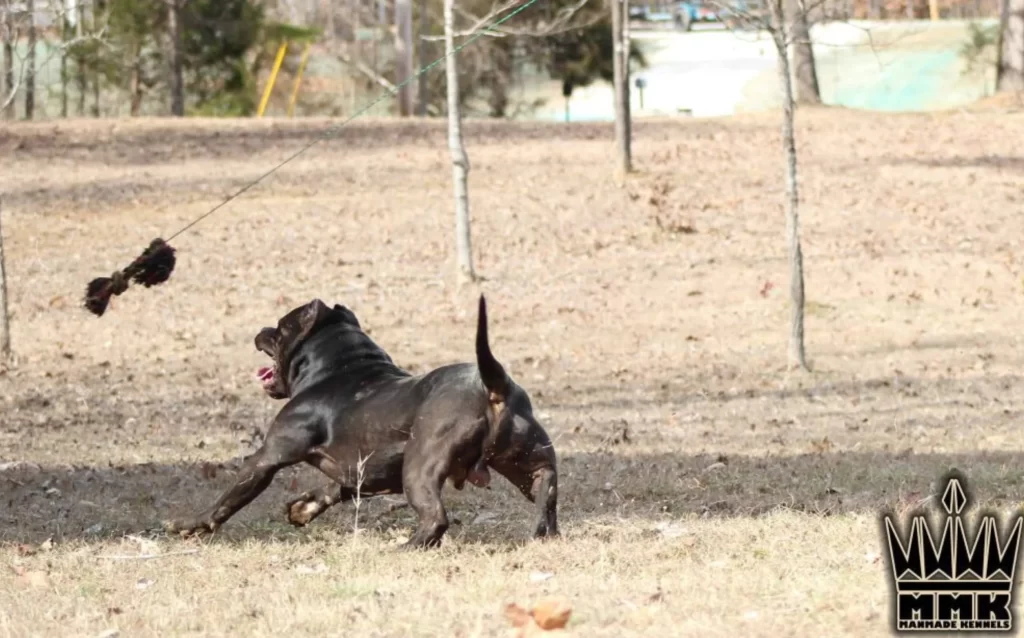
Pitbulls take fetch seriously. Their prey drive and explosive speed make chasing a ball or frisbee genuinely satisfying. For something with more engagement, try a flirt pole (essentially a giant cat toy scaled up for a 60-pound dog). It mimics moving prey and works instincts in a controlled setting.
A 15-minute flirt pole session can tire out even the most wired Pitbull. It’s one of the best low-footprint activities you can do in a small yard.
Frequency: 2 to 3 sessions per week works well for most dogs. Daily use can stress joints in younger dogs, so rotate it with other activities.
What to buy: Look for a pole with a replaceable lure. The lure gets destroyed regularly; the pole itself shouldn’t need replacing.
4. Learning New Tricks and Obedience Training
People are often surprised by how much Pitbulls enjoy training. They’re food-motivated and want to please, which makes them fast learners. Working through a new command or trick routine is genuinely fun for them, not just obedience maintenance.
A bored Pitbull will find something to do. Usually something you won’t like.
Advanced options worth exploring:
- Agility courses: great for dogs with high energy and fast reflexes
- Nose work and scent training: mentally exhausting in the best way, and accessible to dogs who can’t do heavy physical activity
- Obedience competition: Pitbulls compete and win regularly; the breed is more decorated than most people realize
Session length: 10 to 15 minutes is the sweet spot. Short, frequent sessions beat long ones.
5. Wrestling and Rough Play
Pitbulls are famously mouthy and love rough-and-tumble play with dogs they know or with their favorite humans. Body contact, mock wrestling, playful shoving: this is normal behavior. When properly supervised, there’s nothing wrong with it.
If you have multiple dogs, watch that neither one is getting overwhelmed. Pitbulls play intensely, and not every dog wants that energy. A dog repeatedly trying to disengage or rolling onto its back too often is telling you the session needs a break.
6. Swimming
A lot of Pitbulls love water once they’ve been introduced to it properly. They’re not built for it the way Retrievers are; their muscle mass means they have to work harder to stay afloat. Plenty still take to it enthusiastically on a hot day.
Start with a kiddie pool or shallow water. Let the dog choose to go in. Don’t throw them in or force it.
Safety: Use a doggy life vest for open water, lakes, or pools. Always supervise. A tired Pitbull in open water can go under fast.
7. Cuddling
After a hard play session, Pitbulls want to be on top of you. Literally. They’ll sprawl across your lap, press their face into yours, and follow you room to room. The breed has a well-earned reputation as a velcro dog.
The muscular exterior does not prepare you for how emotionally needy these dogs are. They thrive on physical closeness and will make it your problem if they’re not getting enough of it.
8. Dog Parks and Playdates
Well-socialized Pitbulls often enjoy other dogs, especially when raised with proper exposure early on. A good dog park can work well, but you need to know your dog’s temperament before showing up.
Some Pitbulls are selective about their companions, and that’s fine. A one-on-one playdate with a familiar dog is usually lower stress and just as satisfying for them.
What to watch: If your dog is stiff-bodied, staring hard, or refusing to disengage from another dog, it’s time to leave. Catching it early prevents incidents.
9. Puzzle Toys and Enrichment
Snuffle mats, Kongs stuffed with frozen peanut butter, lick mats, puzzle feeders: all of these reduce anxiety and boredom in ways a walk alone won’t. Hiding kibble around the house for a scent hunt sounds simple, but it can occupy a Pitbull for a surprisingly long time.
High-drive breeds need their brains worked as much as their bodies. Mental enrichment is especially useful on days when physical exercise gets cut short because of bad weather, recovery, or a packed schedule.
Good starting products:
- Kong Classic (stuff with peanut butter, freeze overnight)
- Snuffle mat for mealtime
- Nina Ottosson puzzle feeders (start with Level 1-2)
How to Tire Out a Pitbull: A Practical Daily Plan
If your Pitbull is bouncing off the walls, here’s a structure that actually works:
Morning (20-30 min): Leash walk with sniff breaks. Let them smell things; it’s mentally tiring.
Midday (10-15 min): Puzzle toy or Kong at mealtime instead of a bowl.
Evening (30-45 min): Active session with fetch, flirt pole, or a run. Follow with a tug game or training for 10 minutes.
A Pitbull that gets this kind of routine is a different dog than one who just gets a backyard and a bowl of food.
Are Pitbulls Good Running Partners?
Yes, with some caveats. Adult Pitbulls are excellent jogging partners and can comfortably handle 4 to 6 miles once conditioned. Build up distance gradually, the same way you would for yourself. Start with 1 to 2 miles and add half a mile per week.
Don’t run with puppies under 18 months. Watch the heat closely too: this breed is more susceptible to heat exhaustion than longer-snouted dogs.
Pitbull Exercise by Age
| Age | Recommended Activity | Duration |
| 8-16 weeks | Short play sessions, socialization | 5 min x 2/day |
| 4-12 months | Leash walks, light play, training | 20-30 min/day |
| 1-2 years | Increasing intensity, fetch, tug | 45-60 min/day |
| 2-7 years | Full exercise program | 60-90 min/day |
| 7+ years | Moderate activity, swimming, walks | 30-45 min/day |
Frequently Asked Questions
How much exercise does a Pitbull need per day? Adult Pitbulls need at least 60 to 90 minutes of physical activity daily. High-energy dogs or dogs under three years old often need more.
What do Pitbulls like to play with? Tug toys, rope toys, flirt poles, tennis balls, and puzzle feeders are all favorites. Avoid toys with small parts that can be swallowed. Pitbulls are aggressive chewers and will destroy most toys faster than you expect.
Are Pitbulls good for apartments? They can be, as long as they get sufficient daily exercise. A Pitbull in an apartment with two solid exercise sessions per day will do fine. A Pitbull in a house with a yard but no activity will be a problem.
Can Pitbulls be left alone? Short periods, yes. They’re prone to separation anxiety and do better with structured routines. If you’re gone for long hours regularly, puzzle toys, a dog walker, or doggy daycare are worth considering.
What games are best for Pitbulls indoors? Tug-of-war, hide and seek with treats, puzzle feeders, and training sessions all work well indoors. A flirt pole can even be used in a hallway if you have one long enough.
Are Pitbulls good with kids? Historically, Pitbulls were called “nanny dogs” for their patience with children. Well-socialized Pitbulls raised around kids tend to be gentle and affectionate. As with any breed, supervision is always the right call.
The Bottom Line
Pitbulls need physical outlets, mental challenges, and consistent time with their people. Get those three things right and you’ll have a genuinely content dog.
At ManMade Kennels, Edward Perez has spent years figuring out what it takes to raise well-rounded Pitbulls, and a lot of it comes down to environment, engagement, and understanding what your dog needs at each stage of life. Browse more guides at ManMade Kennels.

I am a highly skilled content writer and SEO expert with a passion for helping small businesses succeed in the digital world. With my extensive knowledge of the latest SEO techniques and strategies, I have successfully assisted numerous clients in improving their website rankings, generating more leads, and driving a significant increase in website traffic.
As a professional content writer and SEO expert, I am confident in my ability to contribute significantly to the success of small businesses. If you are seeking a results-driven, highly skilled digital marketer who can help you increase your ranking, convert new leads, and see a substantial improvement in website traffic, I would welcome the opportunity to collaborate with you.
Website: https://manmadewebsites.com/
Email: hello@digitalmarketingchap.com